
Everyone's Building a Different Truck
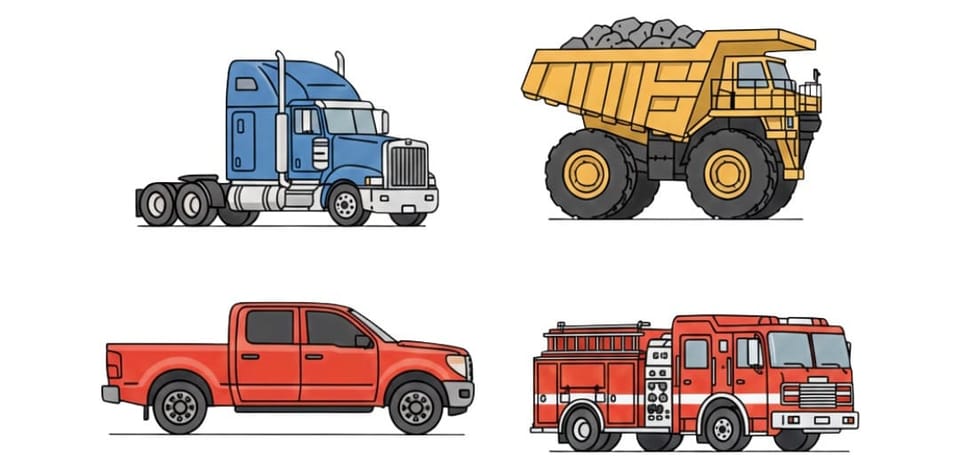
Quick exercise: picture a "truck."
Do you have one in your mind?
Okay. What did you see? A Ford F-150? A massive 18-wheeler? A garbage truck? Maybe a firetruck?
If we were in a meeting right now—analysts, engineers, designers, PMs—and we agreed to "build a truck," we'd all be nodding. We'd think we were aligned. But our mental models are nowhere near the same place. If I'm envisioning a semi and you're envisioning a pickup, we're not actually agreeing; we're just not disagreeing yet.
Design folks call this the Illusion of Agreement. The engineer assumes the infrastructure supports Y. The stakeholder assumes the feature includes X. Everyone leaves happy. The disaster shows up three weeks later when the prototype is unveiled and someone says, "Wait—that's not what I meant."
Part of what makes this hard is that a lot of our professional lives involve engaging between people who don't share the same defaults. Tech wants clean, scalable infrastructure. Design wants something people actually want to use. Business wants to know if it's worth the investment. The words we use across those groups — "alignment," "scalability," "experience" — paper over the differences rather than resolve them.
Which is exactly why Human-Centered Design frameworks like the LUMA System lean so hard on visualization. Not because it makes things look polished, but because the moment you put a marker to a whiteboard, you have to make a choice. You have to draw the wheels. You have to draw the cab. That specificity is the whole point.
A rough sketch does something a conversation can't: it turns an assumption into something people can actually see and react to. It gets the idea out of your head and onto a surface where someone else can finally tell you whether they're seeing the same thing. The drawing doesn't have to be good. Stick figures represent users. Boxes and circles represent systems. Arrows represent movement and value exchange. If you can draw those three things, you can visualize almost any problem worth solving.
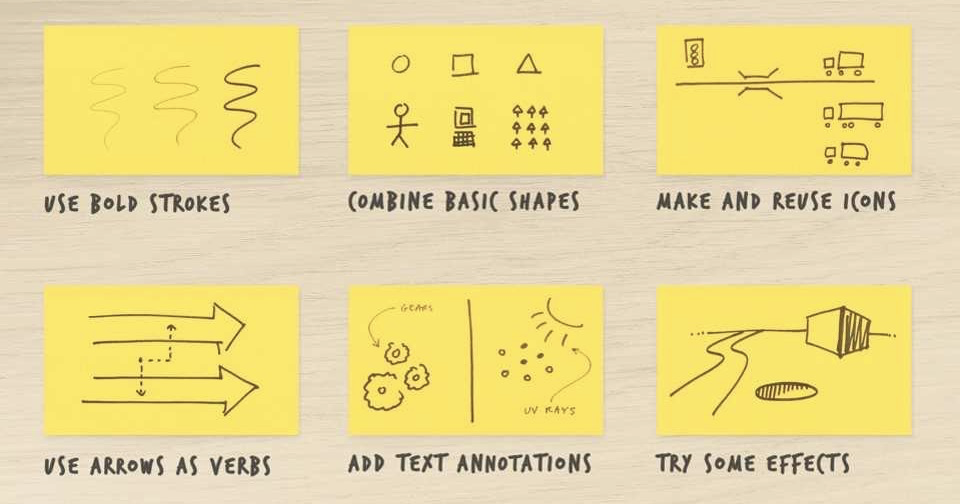
The biggest obstacle I run into when I introduce this in workshops is the "I can't draw" objection. I get it. But drawing for alignment isn't drawing for an audience—it's drawing to think. The fidelity of the sketch doesn't matter; the fidelity of the idea does.
Next time your team reaches a quick verbal consensus, try this: pause, pick up a marker, and say, "Let's just sketch that out to make sure." Five minutes now might save you weeks of rework later.
What's the last assumption you made in a meeting that turned out to be a truck of a different kind?
![[Resource Guide] Lead with Empathy: Design for Adoption](/content/images/size/w750/2026/04/Screenshot-2026-04-30-at-12.59.14---AM-2.png)
Member discussion